 >
>
The salt marsh, our provider, protector, and purifier

Amelia Island's salt marshes are loved for their beauty, tranquility, and abundant wildlife. In the marsh egrets coast low over grasses of vibrant green and subtle gold, landing in the meandering waterways that weave through an immense glittering landscape. We enjoy boating, kayaking, fishing, and sitting at the edge of the marsh gazing upon a place that is both familiar and timeless. Local artists love to paint the salt marsh, portraying its endless beauty. The salt marsh is a bird watcher’s delight, a sanctuary attracting migratory and local bird species for all to appreciate.
But do we really understand the benefits of a functioning salt marsh?
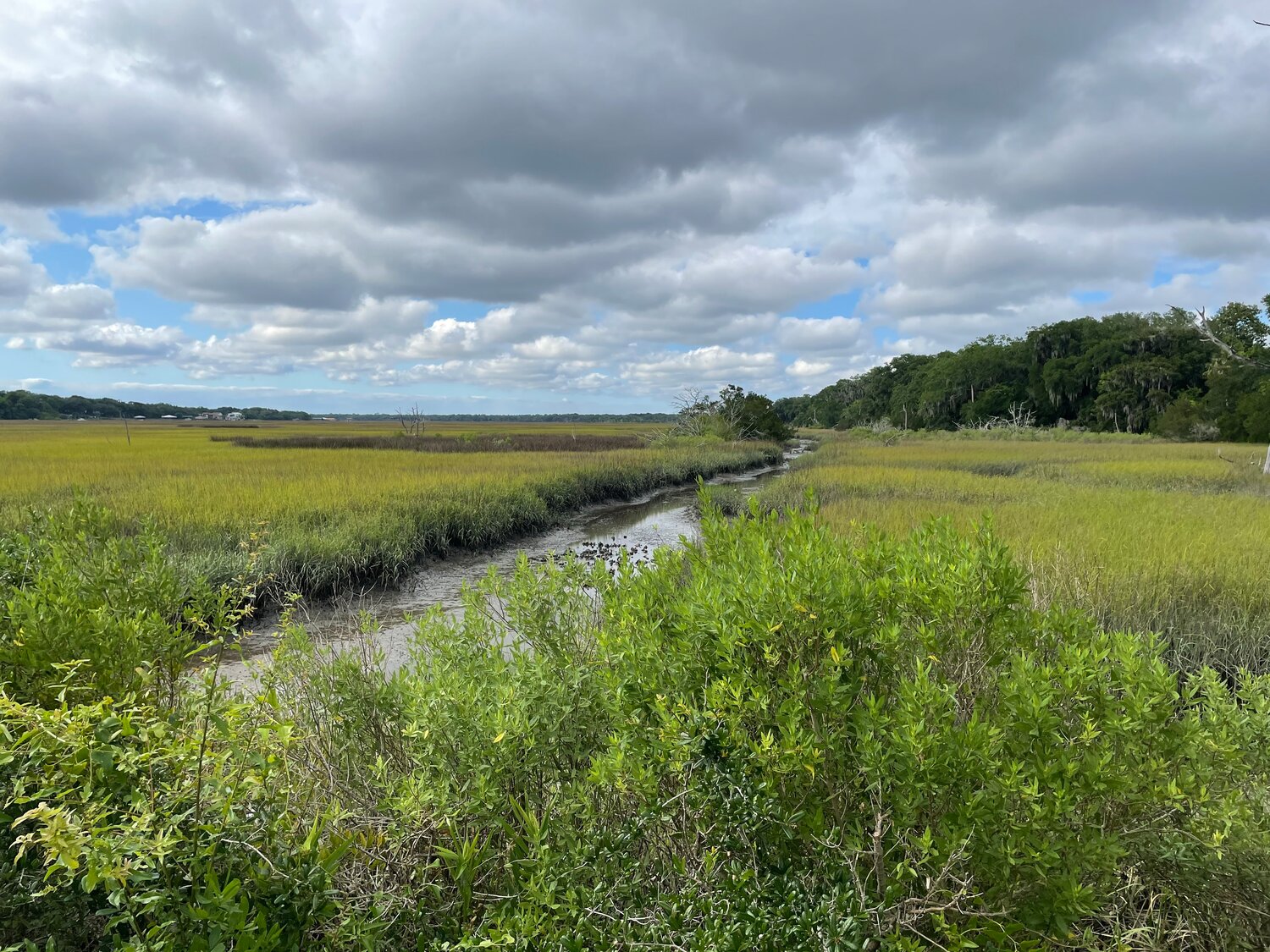
The salt marsh is a provider, being one of the most productive ecosystems on earth. Seafood cuisine, like shrimp, crabs, flounder, fin-fish, and oysters all have their origin in the salt marsh. The marsh is a nursery, a place where the larvae of these delicious species enter the food chain. The juveniles grow up in the safety of the marsh grass, nurtured by the nutrient-rich brackish water. The salt marsh cordgrass and oyster beds buffer the movement of the tides and create endless small protective spaces for growing sea life to thrive. So many marine organisms have their origin in the womb of the salt marsh. Once considered a wasteland, marshes are now understood to be very productive, endlessly filling our dinner plates.
The salt marsh is also a protector. The marsh can absorb a tremendous amount of water, protecting coastal homes, roads, docks, and municipal structures. The torrential rain from tropical storms and hurricanes, often combined with king tides, produces storm surge. This storm surge ideally flows into salt marshes, which accommodate the incoming water, stopping it from flooding residential areas. Here on Amelia Island, we are surrounded by many square miles of salt marsh.
To understand the extent to which the marsh literally saves our community, look at areas in Florida where the salt marsh no longer exists. Cities that have chosen to fill in their marshes and develop right up to the water’s edge have catastrophic consequences when storms hit. They have removed their buffer zone. These areas can no longer naturally absorb the water, potentially causing millions of dollars in property damage. When you have hundreds of acres of salt marsh, there is plenty of room for the incoming water. The marsh soaks it up like a sponge and spreads it out over a large area. When the City of Fernandina Beach is hit by large storms, the water barely peeks over Atlantic Avenue. We are truly blessed to have the protection of an expansive salt marsh.
The salt marsh is a purifier. The run-off from our city streets and our yards drain into the salt marsh. Contaminated water oozes into the mud under the meadows of salt marsh cordgrass. This mud contains bacteria that can process and reduce toxins. The bacteria are able to neutralize pesticides, fertilizers, heavy metals, and break down hydrocarbon compounds like gasoline and motor oil. Additionally, a single adult oyster can filter fifty gallons of water in a twenty-four-hour period, helping purify the water in the marsh. By the time marsh water reaches the ocean, it has been cleansed. Ocean water adjacent to marshes is much cleaner than ocean water that has no filtration zone for natural water treatment to occur. Nature has a system, free of charge, that gets rid of toxins, providing healthier water for which people and wildlife can enjoy.
In the past, humanity did not understand the value of the salt marsh. Unfortunately, many coastal towns are built on filled-in wetlands. We do not notice their absence when we visit these cities, walking down paved streets that were once beneficial salt marshes. This is hard to undo; fortunately, the city of Fernandina Beach did just that. In 2002 the city restored over fifty acres of precious salt marsh, which is now part of the Egans Creek Greenway, north of Atlantic Ave. Today, we enjoy abundant fishing, less flooding, and cleaner beaches. Our incredible salt marsh is a giver of life, a guardian of our property, and a natural filtration system. The salt marsh provides all these services at no cost to us. I hope that people recognize, protect, and appreciate the gifts we receive from this beautiful, dynamic ecosystem.


Comments
2 comments on this item Please log in to comment by clicking here
BBillings
Wonderful article - thank you Angela Ray.
Tuesday, April 14 Report this
Hedwigluvr
Thank you for such a great description of life giving marshes. I visit Egan’s almost daily and never cease to appreciate its life giving sources. Am a realist but do remain hopeful Fernandina Beach will do the right thing when it comes to keeping marsh land preserved.
Thursday, June 25 Report this