 >
>
Pat’s Wildways: Raising clams in Cedar Key
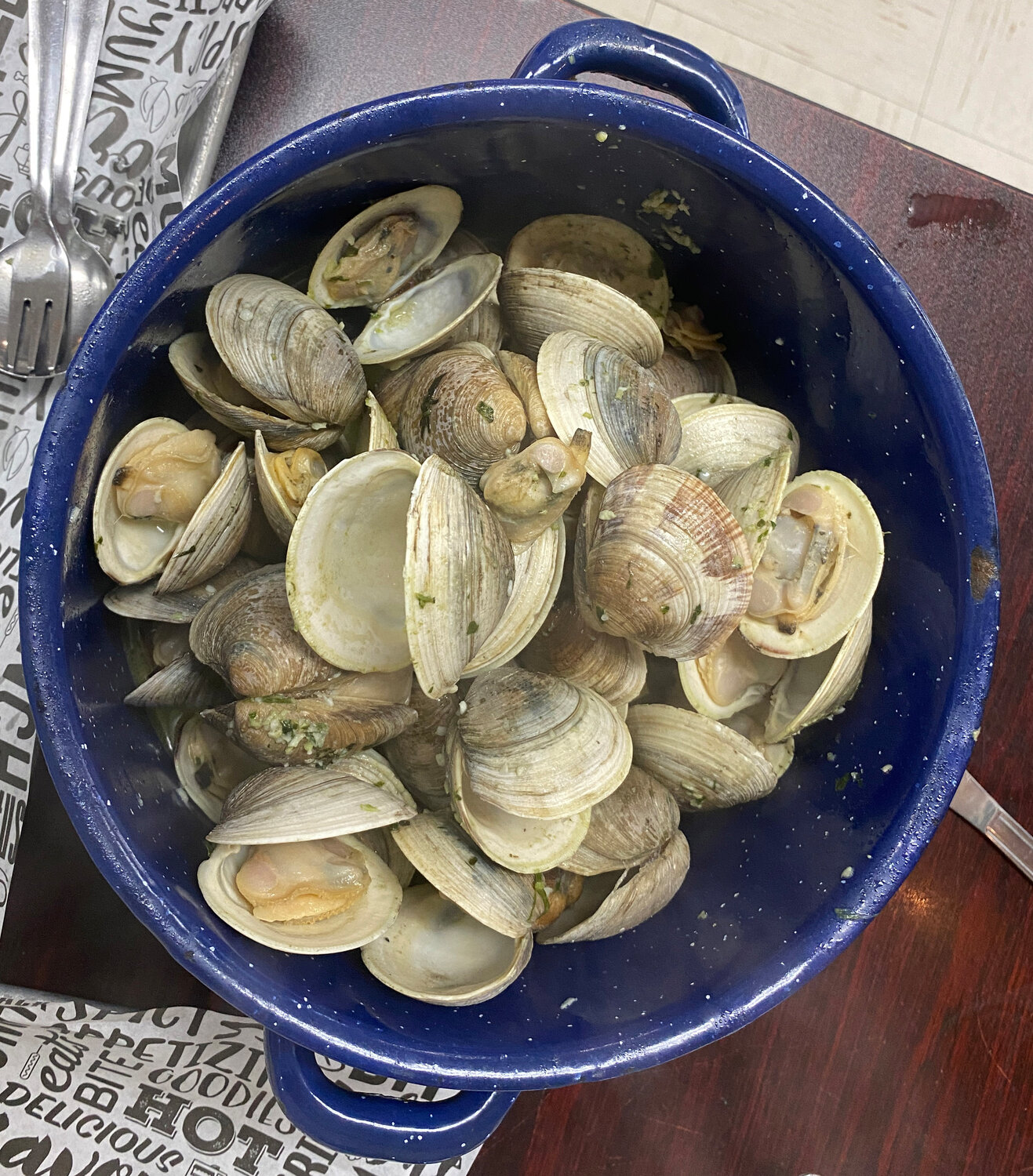

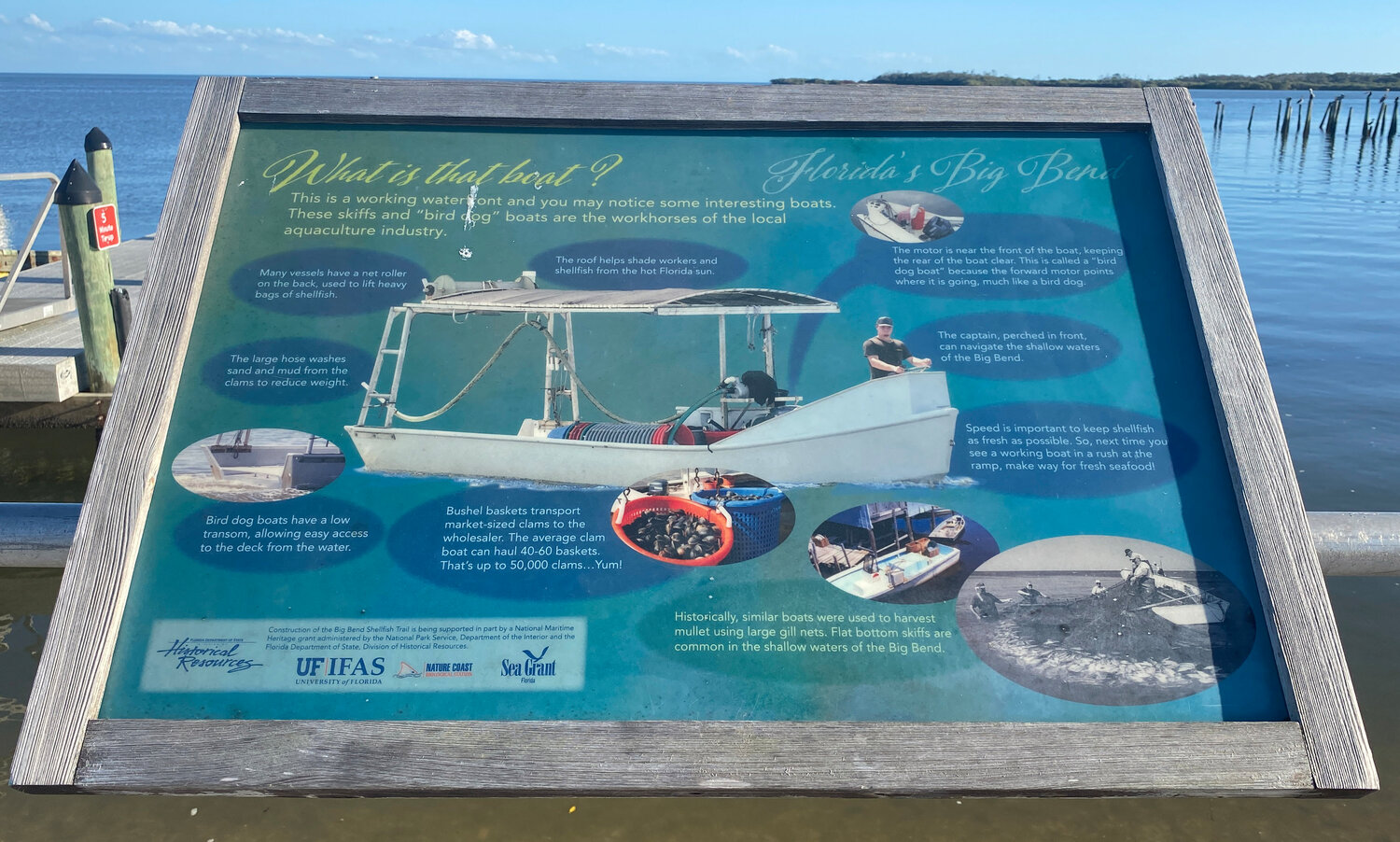
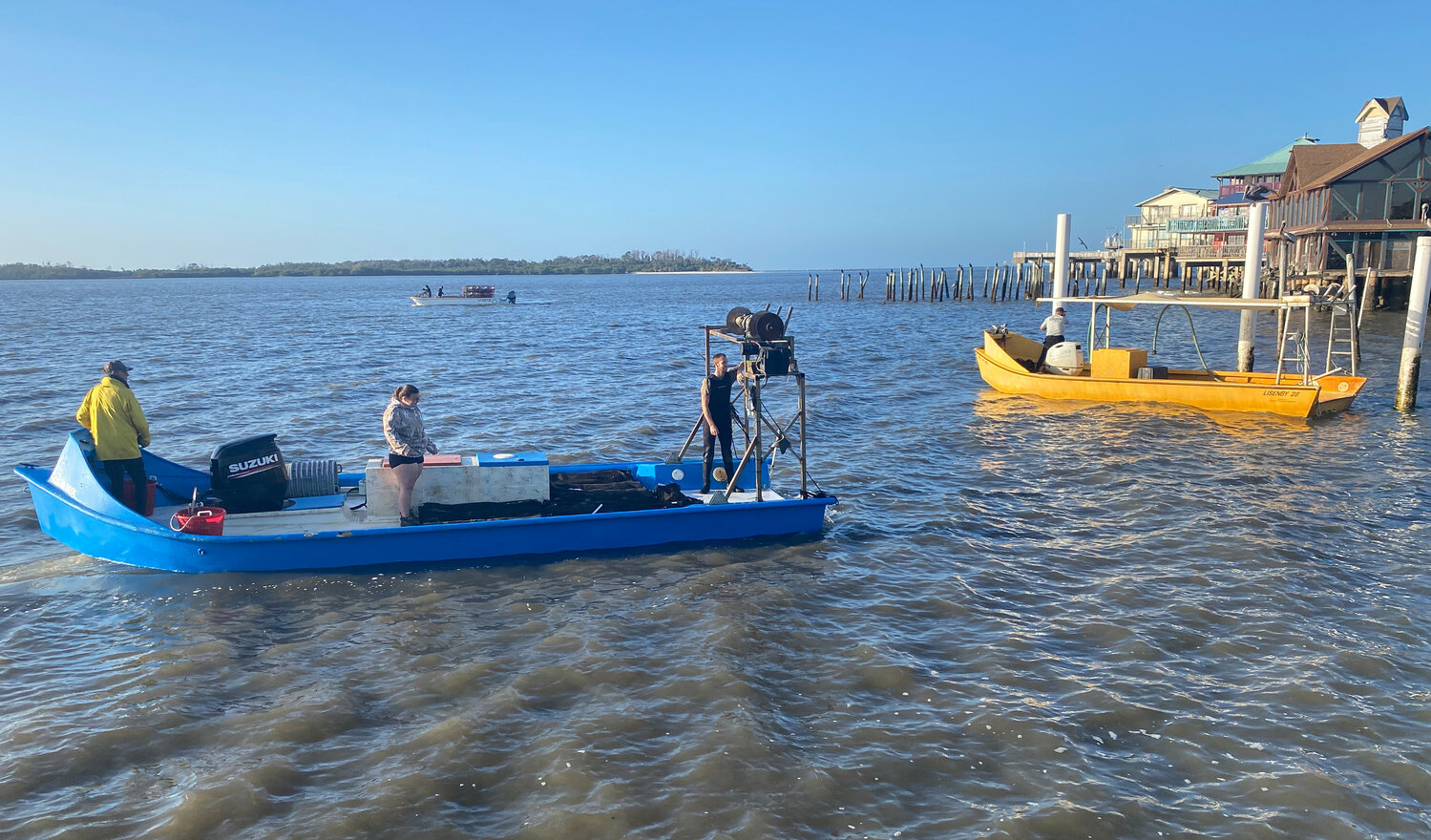


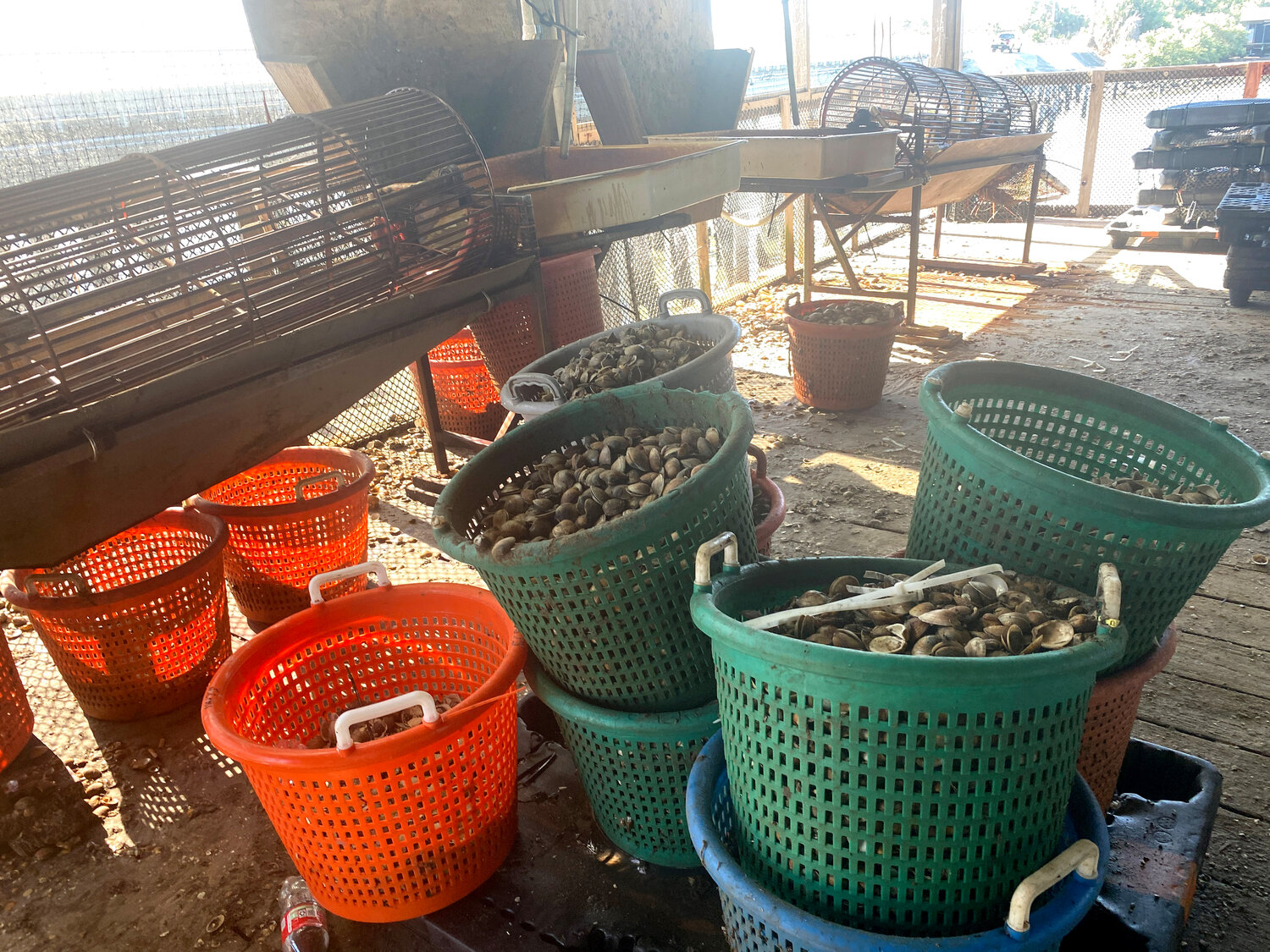


It is difficult to miss all the clamming activity in Cedar Key, Florida, if you keep your eyes open, like I do. Unlike the clamming activities Bucko participated in as a youth in Blue Point, Long Island, where wild clams were scooped up from the muddy bottoms, these clams are part of a mariculture enterprise that produces about 90% of the state’s cultured clams. The clam business is visible in a number of ways. Local restaurants like Steamers specialize in serving large buckets of steamed clams and clam chowder is a favorite entrée at most establishments. A large clam-shaped piece of art on the main street is adorned with depictions of the clamming industry, and clamming boats come and go from the boat ramp.
But much of this activity is underwater, where clams of various ages are grown in bags that are submerged and sunk into the muddy bottom, where they can filter-feed on plankton in the water and grow to harvestable sizes. More than 150 leases to parts of the sea bottom provide jobs for a few hundred people in the area. Years ago the mullet fishery filled this role for local fisher folk, but when laws were passed that prohibited gill nets, these resilient people, with the help of the University of Florida, found this new way of purposing their boats.
On a recent trip to Cedar Key I saw it all. On an early morning walk around town I saw people putting their unusual “bird dog boats” into the water for a day of clamming. These boats have a low transom at the stern, enabling large bags full of clams to be pulled from the water onto the vessel. Clams take almost two years to grow to edible size, and this involves routinely taking the young clams out of one bag and spreading them to more bags as they get bigger and need more room.
All that is interesting for sure, but as a biologist I wondered, where do the baby clams come from that populate these bags? The answer was right in front of me on the drive back out of town — Southern Cross Sea Farms. So of course I stopped in to talk to them and a worker was happy to show me around.
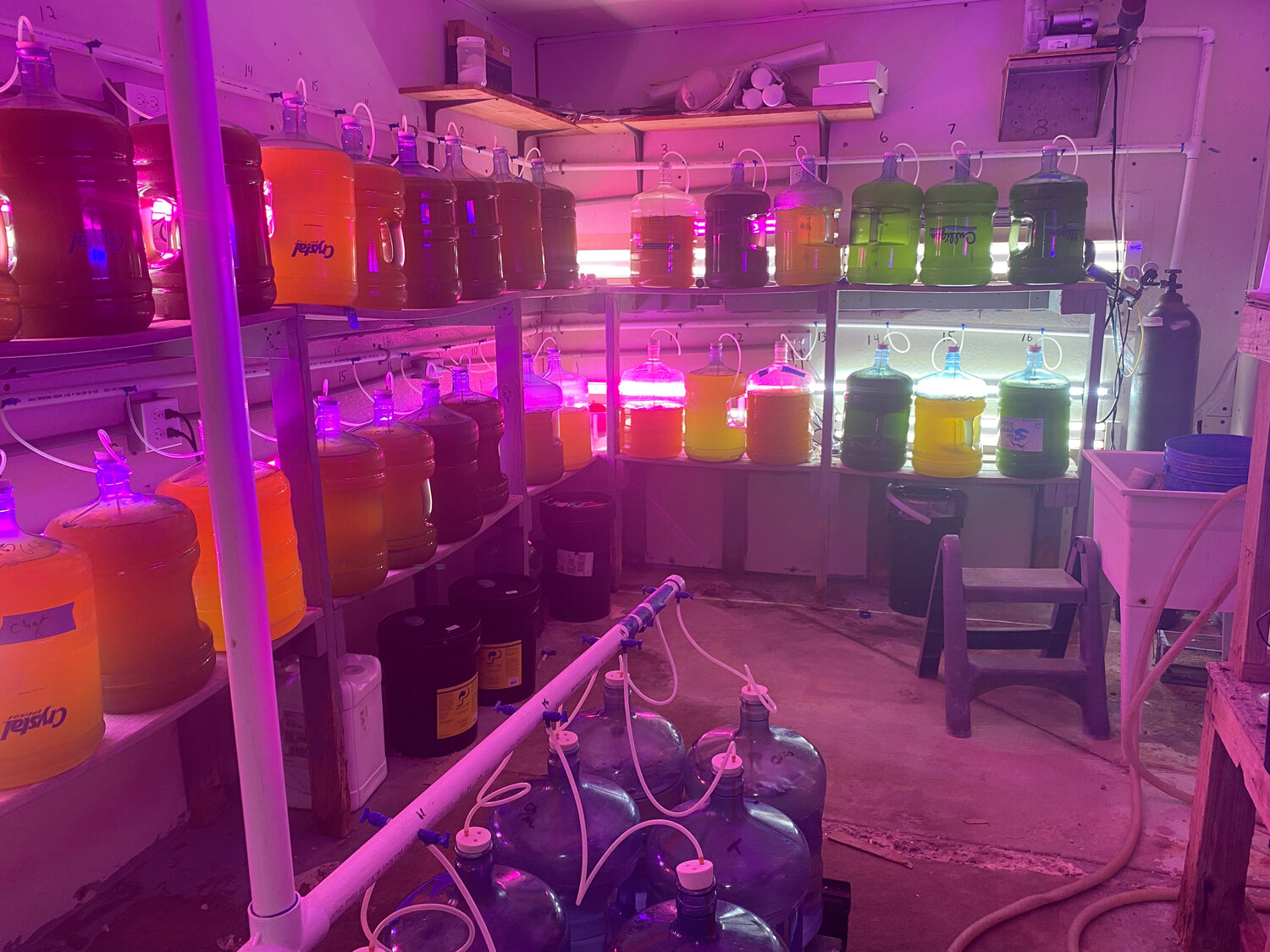
First stop was the “mad scientist lab,” as my tour guide called it: a strangely lit room with colored vats holding various types of algae. Algae feeds young clams, and it takes a sensitive combination of lights and water quality to keep these strains flourishing. The brood stock of adult clams at the facility spawn and produce planktonic larvae, which are fed algae in large tanks. As the clams grow they change into different life forms, and are moved into different tanks where they finally become spat, attach to hard surfaces and are moved to floating pens. Then they can be sold in mesh bags for clammers to take to their leases offshore of Cedar Key. All of this takes months, first in the mariculture facility, then in the wild. The clammer needs to routinely take their young clams out of the mesh bags, separate them, and put them into more bags with room to grow. It may take two years from hatching to edible size — a long time investment that will only pay off if the weather and water conditions cooperate. In Cedar Key, often in the path of major hurricanes, the survival of these clam beds is sometimes in question but the payoff from a mature crop of clams can be considerable.
Southern Cross Sea Farms also participates in the end process, when loads of mature clams are brought to them for sorting, packaging and selling. Many of the Cedar Key-raised clams find their way to restaurants and major retailers like Costco all over the country. You can of course buy clams right from the facility, sold in three descending sizes: top necks, middle necks and little necks.
My private tour at the mariculture facility showed me all stages of their process, my conversations with clammers filled in the blanks and my stomach reveled in the bellyfuls of steamed clams I consumed while at Cedar Key. Enjoy the photos. And check out Cedar Key yourself — a fun place to visit here in North Florida.
Pat Foster-Turley, Ph.D., is a zoologist on Amelia Island. She welcomes your nature questions and observations. patandbucko@yahoo.com


Comments
No comments on this item Please log in to comment by clicking here