 >
>
Pat’s Wildways: Foraging for Nuts

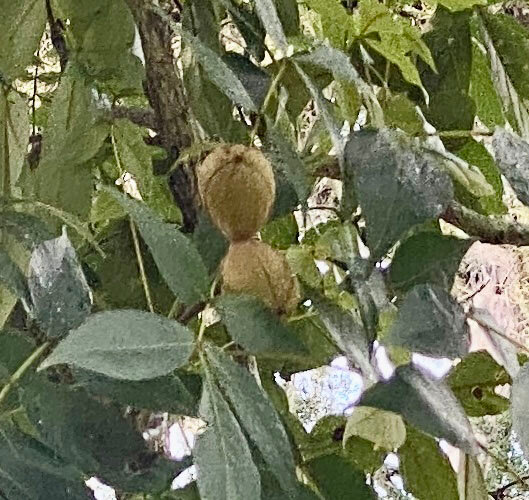


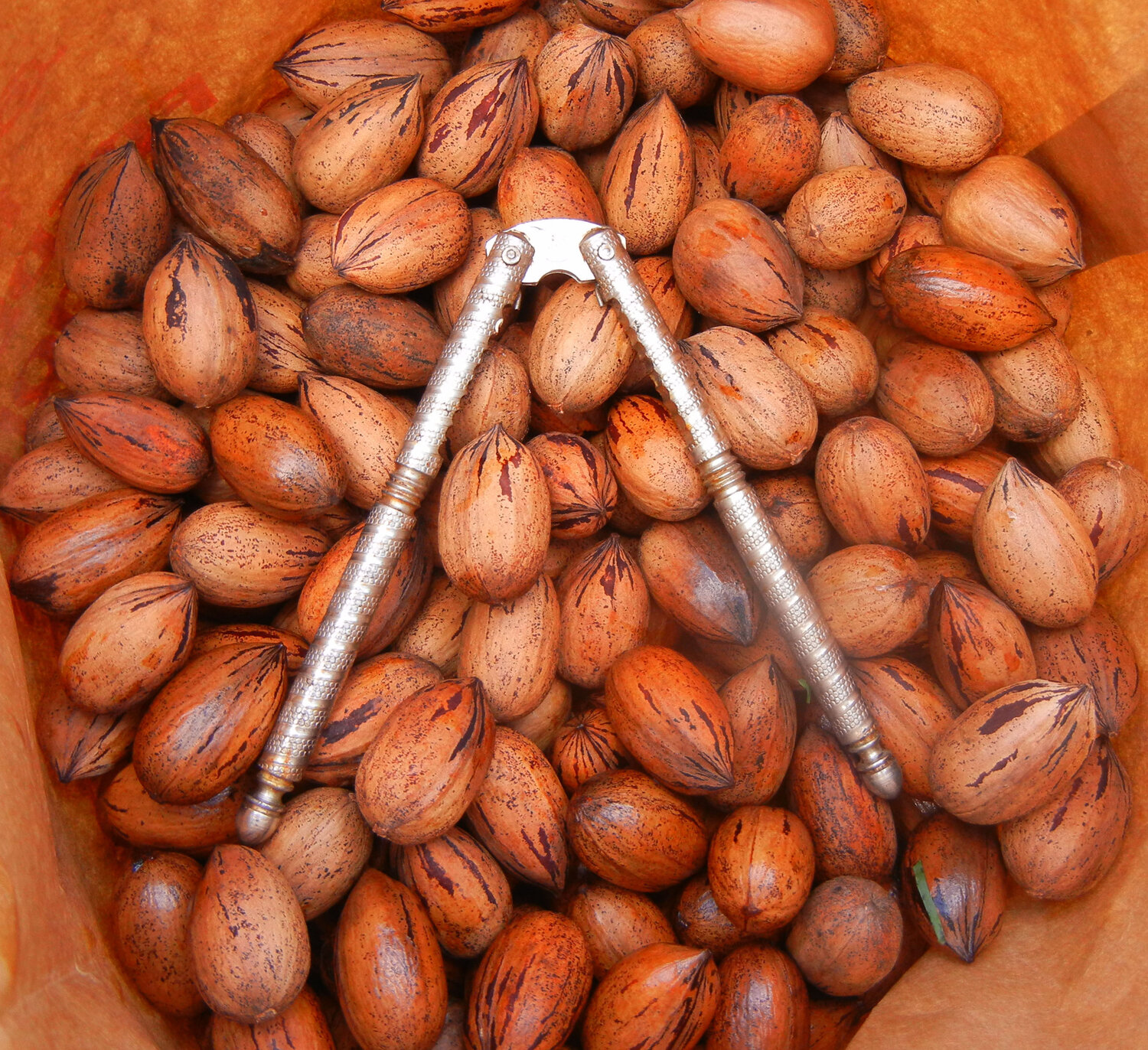


It may be hotter than blazes here on Amelia Island right now, but there are signs that autumn is coming. When I walk around my usual trails in the woods, my eyes are now focused on the ground, and here and there I find nuts. The nuts, sadly, are only hickory nuts, the type locals call pignuts due to their supposed resemblance to a pig’s nose (?), but more likely because wild pigs eat them. These nuts are hard-shelled, with a bit of nut meat inside, but oh, so difficult to extract, at least if you are a human. But wow, this bounty of nuts is a great find for our local resident wildlife.
The past week or so Bucko and I have been examining pignut hickory nuts that have dropped on the roads of Fort Clinch State Park and the Bosque Bello Cemetery. These hickory trees need to be at least 30 years old to produce nuts, and can live up to 200 years, producing nuts ever since, and happily the park and the cemetery have protected these trees for decades.
While humans mostly scorn these nuts, it is a bonanza for native wildlife on our island. The nuts on the ground tell their harvesting stories. Immature pignuts are green, with an outer coating protecting the nut inside. Apparently, the green layer is palatable to some local critters too. Most of the still-green pignuts we have collected on the ground show bite marks where the nut is attached to the tree, maybe indicating these were chewed while still on the tree and dropped to the ground. Other nuts on the ground are only shells, half-empty with the tasty insides gone. Maybe these were eaten on the tree too, and dropped? Throughout the Bosque Bello Cemetery, on flat headstones and walls, there are traces of hickory nut pieces where some animal broke them up and consumed them there.
Squirrels are the most likely candidates, but did you know we have two species of squirrels here, the ubiquitous gray squirrels that roam our yards by day and the seldom-seen small flying squirrels that roam the trees at night? Flying squirrels are also attracted to bird feeders with nuts offered, but you need to watch at night, or set up a trail camera to see them.
In the wild, supposedly you can see if it is flying squirrels or gray squirrels that eat the mature brown nuts by looking for a “notch” on one side showing where only flying squirrels carry their treasures. Well, we couldn’t find any notches. But we sure did find a lot of empty shells on the ground. Someone is sure feasting on them and I’m betting on both squirrel species. One USDA study estimates that pignuts can make up from 10-20% of their diet. Some of the nuts on the ground may have been consumed there by gray squirrels and dwelling native wildlife, like wood rats and raccoons. Although deer are said to eat them, we haven’t see them do it. While we were watching the nuts a gopher tortoise wandered by, but was only interested in the grass sprigs near the nuts.
It’s been fun investigating pig nuts, but it is not nearly as much fun as I once had harvesting pecans from trees that used to grow in our now sadly “paid parking premium area” of our Fernandina Beach downtown streets. In our first decade living here, I spent many days visiting the pecan trees between Ash and Alachua streets and from Second Street to Eighth Street. Often in the fall I could pick up loads of pecans that I spent hours shelling, then roasting them with spices and making Christmas presents for my friends and family of “Artisan Fernandina pecans.” But no longer. One by one I have watched the old pecan trees disappear. A few died when the ground under them became a paved parking lot. Some may have died of old age, but that is unlikely since they can live up to 200 years. The saddest losses are those mature fruit-bearing pecan trees that have been intentionally cut down to make way for more housing on smaller lots. This area of downtown was once “premium” to me, but no longer.
Pat Foster-Turley, P.h.D., is a zoologist on Amelia Island. She welcomes your nature questions and observations. patandbucko@yahoo.com


Comments
1 comment on this item Please log in to comment by clicking here
LucyP74
Ms. Pat, thanks for sharing the information about how old the pignut hickory tree has to be in order to bear fruit! I have some in my yard (at my driveway, unfortunately) but I refuse to cut it down due to the fact that it adds to the tree buffer for my urban forest. The squirrels DO love them! We don’t park under it because of that! :-) They are also a fairly wind resistant tree. It is my hope that when we move that the next person will enjoy the naturescaping as much as I do. I am also glad to hear pecan trees live so long. I recently had one my Mama planted about 50 years ago trimmed. It’s my hope it will continue to thrive.
Sunday, August 24, 2025 Report this