 >
>
Guardrails

My father hardly talked about his childhood at all. He told me a few stories about my paternal grandparents. I saw them only in a few photos. They both died when I was one year old. They married later in life and had 5 children in 10 years, with my father as the youngest.
My father did recount the story of an adventurous trip his family took in 1927 when he was 5 years old. My grandfather packed his family into a Model T with a camping trailer attached to the back. They headed from New Jersey to California to introduce the children to their mother’s family who had moved to California to become almond ranchers. They could have afforded train tickets. My grandfather wanted his children to experience the vastness of the country up close and personal.

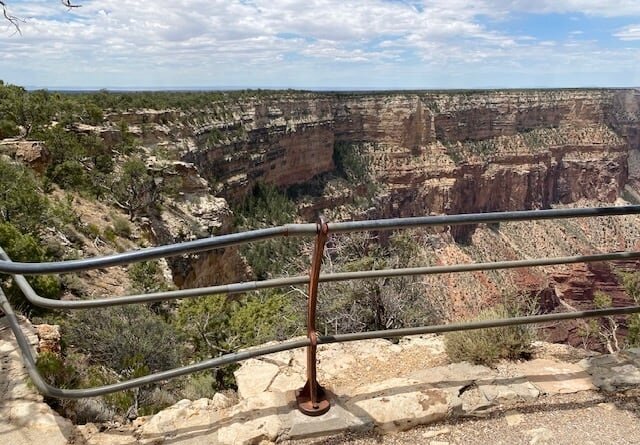
When the family reached the Grand Canyon, they were in awe of the natural beauty. The children ran around looking at the expansive views. My grandmother was trying to keep track of the children. She briefly turned away from my dad. When she turned back, he was swinging from a small iron bar on the only railing over the canyon’s edge. She cried his name and promptly fainted. My father thought this was funny. The rest of the family did not laugh.
I have not been to the Grand Canyon, but from what I saw online, there are still many places with scant railings with warning signs that say, “these areas are not child safe!” I guess not much has changed there since 1927.
Another “no guardrails” story is from my own experience. In 1974, I went to Greece on a trip sponsored by the Anthropology department of my college. It was an experience of a lifetime.
Back then, the whole Acropolis was open to be explored by eager college students. There was no visitors’ center. No tickets were required for entry. We roamed all over it, including walking in and out of the remains of the Parthenon, climbing over ancient ruins. I was shocked to see that some visitors had left their initials on the ruins. Other visitors picked up little pieces and put them in their pockets. Needless to say, much more strict guardrails are now in place in terms of visitor policies. The irreplaceable nature of the place is protected.
External guardrails serve a protective function. In a similar way, we have internal guardrails called boundaries. As we develop physically and morally, we internalize guidelines based on our familial, cultural, religious and social backgrounds. When our boundaries are violated, we feel anger or fear. When we violate our own boundaries, we feel guilt or shame.
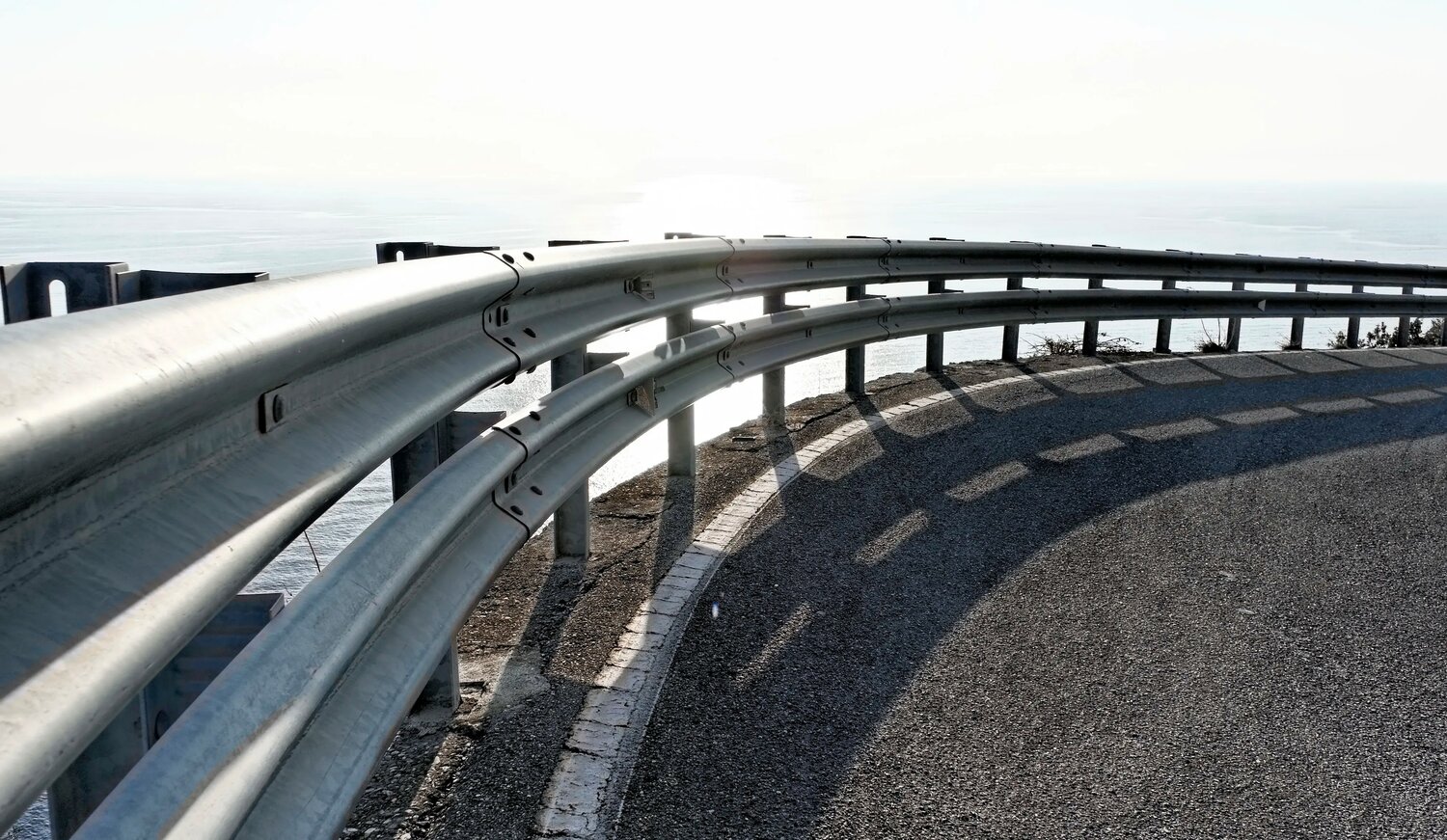
A frequent lament of our time is that we have lost our guardrails. This is evident on many levels of our society. Many have not internalized guardrails from the past. Religions are not practiced. Families are fractured. We see one another through screens. We are isolated. The glue of belief in a common good is not being reinforced. The guardrails of our government having three separate but co-equal branches put in place by our founding documents have been run over rough shod.
The guardrails of the past came with limits. As individuals and as a society, we need guardrails to “keep us on the road,” so to speak. The safety and integrity of the whole is at risk when people do whatever they want whenever they want with impunity.
I realize everyone is not of the Judeo-Christian tradition. However, there is significant wisdom from this tradition about the kind of guardrails that hold a people together.
In the gospel of the Christian Scriptures, an incident is cited in which Jesus is put to the test by religious authorities. He is asked which is the greatest commandment. He quotes Deuteronomy and recites the first commandment which is the basic prayer of the Jewish faith and then adds the second to it:
“Teacher, which commandment in the law is the greatest?’" He said to him, ‘“You shall love the Lord your God with all your heart, and with all your soul, and with all your mind.”
This is the greatest and first commandment. And a second is like it: “You shall love your neighbour as yourself.” On these two commandments hang all the law and the prophets.’” - Matthew 22: 36-40
Adventure, exploration, and testing limits have their place in our development and in our society. We do not want to squelch innovation or creativity. We do need to recognize that there is danger when we carelessly dangle over the edge, whether one perceives it or not.
If we trample over history and disregard its legacy and pick over its pieces and fail to learn from its example, we hurt not only ourselves, but also those who follow us.
My life bears the scrapes of the times I have bumped into guardrails. I hope I have learned from my experiences. I hope you have too.
A saying today is “keep the main thing the main thing.”
Basing our lives on a few core principles can provide us the stability we need to thrive in turbulent times.


Comments
1 comment on this item Please log in to comment by clicking here
Gkersten
Such a wonderful, thought provoking story, you nailed it.
Tuesday, April 14 Report this